Friday, September 25, 2020

Friday, September 25: reevaluting your First Amendment thoughts

In class: Yesterday, we reviewed the article on the First Amendment. I asked you to be prepared to orally or in the chat repond to the questions below.  We will begin with reviewing those questions. Seveal folks sent me their ideas. Thank you.  Today everyone else may express them orally or on the chat, where Ms. Sweet will share them out.  This is a class participation grade.


Having completed the reading (another copy below) that gives a succinct interpretation of the First Amendment, we are going to apply your understanding to contempory issue of Black Lives Matter.

Assignment based upon the hypothetical situations from the Monday / Tuesday. Another copy below. Choose two of the responses from Monday's blog and write a minimum of 75 word response for each, explaining how what you now understand about the First Amendment has changed your initial response.   Due to me by no later than midnight on Saturday, with the exception of those who are designated to receive extended time. (I need time to read these on Sunday!)
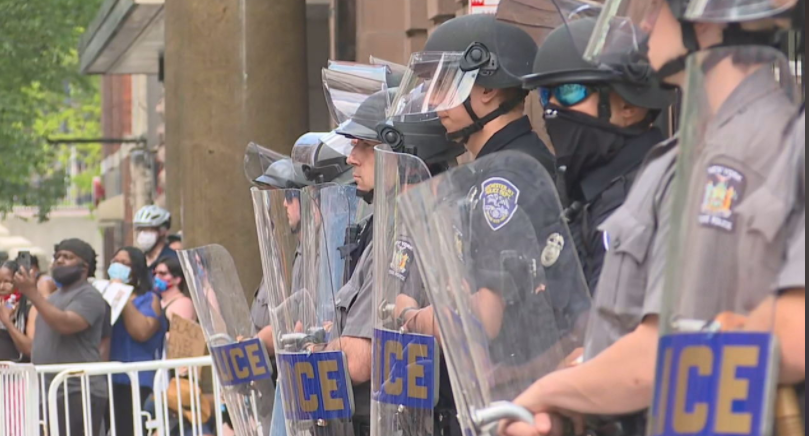
Rochester June 5, 2020

For each of the following questions, refer specifically to the text you read.

1. Why are Black Lives Matter allowed to protest?   
2. Under the First Amendment, what rules must the protesters follow?


3. After watching this clip, in what ways do you observe the First Amendment being applied?
4. What actions might occur that would require police interference?


A Common Interpretation: Freedom of Speech and the Press
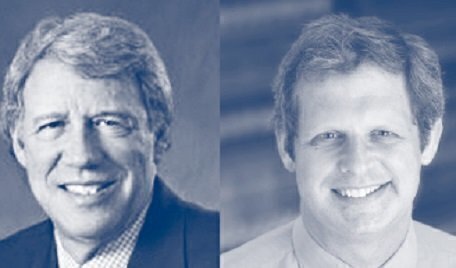
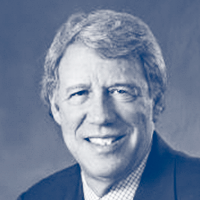
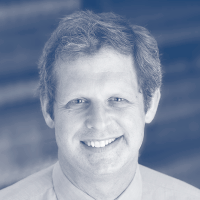
As part of the National Constitution Center’s Interactive Constitution project, leading scholars across the legal and philosophical spectrum find common ground on the Constitution’s articles, amendments, and provisions. In this essay from September 2015, Geoffrey R. Stone from the University of Chicago Law School and Eugene Volokh from the UCLA School of Law say the legal protection today offered by the First Amendment is stronger than ever before in our history.
stonevolokh
Geoffrey R. Stone and Eugene Volokh

“Congress shall make no law . . .  abridging the freedom of speech, or of the press.” What does this mean today? Generally speaking, it means that the government may not jail, fine, or impose civil liability on people or organizations based on what they say or write, except in exceptional circumstances.


Although the First Amendment says “Congress,” the Supreme Court has held that speakers are protected against all government agencies and officials: federal, state, and local, and legislative, executive, or judicial. The First Amendment does not protect speakers, however, against private individuals or organizations, such as private employers, private colleges, or private landowners. The First Amendment restrains only the government.

The Supreme Court has interpreted “speech” and “press” broadly as covering not only talking, writing, and printing, but also broadcasting, using the Internet, and other forms of expression. The freedom of speech also applies to symbolic expression, such as displaying flags, burning flags, wearing armbands, burning crosses, and the like.

The Supreme Court has held that restrictions on speech because of its content—that is, when the government targets the speaker’s message—generally violate the First Amendment. Laws that prohibit people from criticizing a war, opposing abortion, or advocating high taxes are examples of unconstitutional content-based restrictions. Such laws are thought to be especially problematic because they distort public debate and contradict a basic principle of self-governance: that the government cannot be trusted to decide what ideas or information “the people” should be allowed to hear.

There are generally three situations in which the government can constitutionally restrict speech under a less demanding standard.

1. In some circumstances, the Supreme Court has held that certain types of speech are of only “low” First Amendment value, such as:

a. Defamation: False statements that damage a person’s reputations can lead to civil liability (and even to criminal punishment), especially when the speaker deliberately lied or said things they knew were likely false. New York Times v. Sullivan(1964).

b. True threats: Threats to commit a crime (for example, “I’ll kill you if you don’t give me your money”) can be punished. Watts v. United States(1969).

c. “Fighting words”: Face-to-face personal insults that are likely to lead to an immediate fight are punishable. Chaplinsky v. New Hampshire (1942). But this does not include political statements that offend others and provoke them to violence.  For example, civil rights or anti-abortion protesters cannot be silenced merely because passersby respond violently to their speech. Cox v. Louisiana (1965).

d. Obscenity: Hard-core, highly sexually explicit pornography is not protected by the First Amendment. Miller v. California (1973). In practice, however, the government rarely prosecutes online distributors of such material.

e. Child pornography: Photographs or videos involving actual children engaging in sexual conduct are punishable, because allowing such materials would create an incentive to sexually abuse children in order to produce such material. New York v. Ferber (1982).

f. Commercial advertising: Speech advertising a product or service is constitutionally protected, but not as much as other speech. For instance, the government may ban misleading commercial advertising, but it generally can’t ban misleading political speech. Virginia Pharmacy v. Virginia Citizens Council(1976).

Outside these narrow categories of “low” value speech, most other content-based restrictions on speech are presumptively unconstitutional. Even entertainment, vulgarity, “hate speech” (bigoted speech about particular races, religions, sexual orientations, and the like), blasphemy (speech that offends people’s religious sensibilities), and violent video games are protected by the First Amendment. The Supreme Court has generally been very reluctant to expand the list of “low” value categories of speech.

2. The government can restrict speech under a less demanding standard when the speaker is in a special relationship to the government. For example, the speech of government employees and of students in public schools can be restricted, even based on content, when their speech is incompatible with their status as public officials or students. A teacher in a public school, for example, can be punished for encouraging students to experiment with illegal drugs, and a government employee who has access to classified information generally can be prohibited from disclosing that information.Pickering v. Board of Education (1968).

3. The government can also restrict speech under a less demanding standard when it does so without regard to the content or message of the speech. Content-neutral restrictions, such as restrictions on noise, blocking traffic, and large signs (which can distract drivers and clutter the landscape), are generally constitutional as long as they are “reasonable.” Because such laws apply neutrally to all speakers without regard to their message, they are less threatening to the core First Amendment concern that government should not be permitted to favor some ideas over others. Turner Broadcasting System, Inc. v. FCC(1994). But not all content-neutral restrictions are viewed as reasonable; for example, a law prohibiting all demonstrations in public parks or all leafleting on public streets would violate the First Amendment. Schneider v. State (1939).

Courts have not always been this protective of free expression. In the nineteenth century, for example, courts allowed punishment of blasphemy, and during and shortly after World War I the Supreme Court held that speech tending to promote crime—such as speech condemning the military draft or praising anarchism—could be punished. Schenck v. United States (1919). Moreover, it was not until 1925 that the Supreme Court held that the First Amendment limited state and local governments, as well as the federal government. Gitlow v. New York (1925).

But starting in the 1920s, the Supreme Court began to read the First Amendment more broadly, and this trend accelerated in the 1960s. Today, the legal protection offered by the First Amendment is stronger than ever before in our history.

Geoffrey R. Stone is Edward H. Levi Distinguished Service Professor of Law, University of Chicago Law School. Eugene Volokh is Gary T. Schwartz Professor of Law, UCLA School of Law.

You can read more from each author on our Interactive Constitution project on this topic, as they offer viewpoints beyond this common interpretation: Fixing Free Speech By Geoffrey R. Stone | Frontiers For Free Speech By Eugene Volokh

Stone, Geoffrey, and Eugene Volkh. “A Common Interpretation: Freedom of Speech and the Press.” National Constitution Center – Constitutioncenter.org, constitutioncenter.org/blog/a-common-interpretation-freedom-of-speech-and-the-press.


************************************
Freedom of Speech Essay Analysis Questions Instructions: Answer the following questions. Feel free to use the sentence starters in italics, but make sure to use your own words in your answers. If you want to use exact language from the essay, use quotation marks – but only quote short phrases, not whole sentences. 

1. According to the essay, why is it important to protect speech, even if that speech is unpopular? Provide evidence. Laws that restrict speech are “thought to be especially problematic because” ... 

2. According to the essay, what kinds of actions are included in the term “speech” as it is found in the First Amendment? Provide evidence. “The Supreme Court has interpreted ‘speech’ and ‘press’ broadly as covering” ... 

3. How has the understanding of what is protected speech changed as technology has changed? Provide evidence.

4. According to the essay, when is it acceptable under the First Amendment to limit or punish speech? Provide evidence. “There are generally three situations in which the government can constitutionally restrict speech” …

 1.

 2

 3. 

5. According to the essay, how has the Supreme Court addressed the freedom of speech during the 100 years since the end of World War I, and what is the status of free speech protections today? Provide evidence. 

In 1925, the Supreme Court held that…


 “Starting in the 1920s” …


 “Today, the legal protections offered” ...

You have class time today. I am here for any questions / conversations.


Wednesday, September 23, 2020

Thursday, September 24: Black Lives Matter and the First Amendment

Housekeeping: Please check your grades. If you have not turned one of these assignments, you will find a ZERO. Please rectify this situation. 

I I am missing lots of work from folks. These have been our assignments, so far this year. If you have not turned in one of the following, you have a zero in its place. If you have questions or concerns, please contact me. We can set up a zoom time, and on Wednesdays I have office hours from 9:30 to 10:30 and 1:30 to 2:30  See link here: https://classroom.google.com/c/MTQ5Mzc1Nzg1MTAz/m/MTc0MjYwODU2NDQ3/details


Are you interested in purchasing a Black Lives Matter shirt?  The on-line store is open until October  2. Make sure to let them know you are a SOTA student. Check it out:

https://flowercityschoolblm-itemorder-com.itemorder.com/sale


News of the Day:   Coronavirus

 1. This time last year, the headline we are facing today would have been unbelievable. Unfathomable. A sick joke. More than 200,000 people have died on American soil of a virus that, mere months ago, was completely unknown to us. Around the world, more than 970,000 lives have been lost. With no vaccine and no widely adopted solutions, the misery won’t be ending soon. 

CNN went back through their archives to see what it was like in those early days before the coronavirus pandemic became an international tragedy and changed nearly every aspect of our lives. 


The first time CNN.com reported on the virus was January 8. 


It was part of a so-called “mysterious pneumonia outbreak” in Wuhan, China. At the time, scientists reported no human-to-human transmissions and no deaths. We know now that the virus may have already been in the US at that time, silently lurking and spreading. 


The virus was compared to the SARS pandemic that killed 774 people in Asia in 2002 and 2003. To put that in perspective, since the first known US Covid-19 death on February 6, an average of more than 858 people have died in the United States from the disease every day -- an entire SARS pandemic every several hours. 


The first time you read about coronavirus was January 21. 


“A new virus in China is threatening to become a pandemic,” the subject line said. At the time, the official global death toll was six. By the time you finish reading this newsletter, at least six people in the world will have died of Covid-19 since you began. 


That’s not an exaggeration. There were 4,795 worldwide deaths yesterday. That’s three deaths per minute. 


To put it in another perspective, the total US coronavirus death toll is equivalent to one 9/11 attack every day for 66 days. The US coronavirus death toll is more than the number of Americans killed in battle in the five most recent wars combined: the Korean War, the Vietnam War, the Iraq War, the War in Afghanistan and the Persian Gulf War.


No matter how you do the math, you’re left with truly horrifying figures. But those figures represent so much more. They represent real lives, real people who leave behind devastated families and unfinished legacies. People who, were it not for this virus, would probably still be alive today. No comparison can properly convey such a loss.


In class: applying Tuesday / Wednesday readings.

                Having completed the reading (another copy below) that gives a succinct interpretation of the First Amendment, we are going to apply your understanding to contempory issue of Black Lives Matter.

Rochester June 5, 2020

For each of the following questions, refer specifically to the text you read.

1. Why are Black Lives Matter allowed to protest?   
2. Under the First Amendment, what rules must the protesters follow?


3. After watching this clip, in what ways do you observe the First Amendment being applied?
4. What actions might occur that would require police interference?


A Common Interpretation: Freedom of Speech and the Press

As part of the National Constitution Center’s Interactive Constitution project, leading scholars across the legal and philosophical spectrum find common ground on the Constitution’s articles, amendments, and provisions. In this essay from September 2015, Geoffrey R. Stone from the University of Chicago Law School and Eugene Volokh from the UCLA School of Law say the legal protection today offered by the First Amendment is stronger than ever before in our history.
stonevolokh
Geoffrey R. Stone and Eugene Volokh

“Congress shall make no law . . .  abridging the freedom of speech, or of the press.” What does this mean today? Generally speaking, it means that the government may not jail, fine, or impose civil liability on people or organizations based on what they say or write, except in exceptional circumstances.


Although the First Amendment says “Congress,” the Supreme Court has held that speakers are protected against all government agencies and officials: federal, state, and local, and legislative, executive, or judicial. The First Amendment does not protect speakers, however, against private individuals or organizations, such as private employers, private colleges, or private landowners. The First Amendment restrains only the government.

The Supreme Court has interpreted “speech” and “press” broadly as covering not only talking, writing, and printing, but also broadcasting, using the Internet, and other forms of expression. The freedom of speech also applies to symbolic expression, such as displaying flags, burning flags, wearing armbands, burning crosses, and the like.

The Supreme Court has held that restrictions on speech because of its content—that is, when the government targets the speaker’s message—generally violate the First Amendment. Laws that prohibit people from criticizing a war, opposing abortion, or advocating high taxes are examples of unconstitutional content-based restrictions. Such laws are thought to be especially problematic because they distort public debate and contradict a basic principle of self-governance: that the government cannot be trusted to decide what ideas or information “the people” should be allowed to hear.

There are generally three situations in which the government can constitutionally restrict speech under a less demanding standard.

1. In some circumstances, the Supreme Court has held that certain types of speech are of only “low” First Amendment value, such as:

a. Defamation: False statements that damage a person’s reputations can lead to civil liability (and even to criminal punishment), especially when the speaker deliberately lied or said things they knew were likely false. New York Times v. Sullivan(1964).

b. True threats: Threats to commit a crime (for example, “I’ll kill you if you don’t give me your money”) can be punished. Watts v. United States(1969).

c. “Fighting words”: Face-to-face personal insults that are likely to lead to an immediate fight are punishable. Chaplinsky v. New Hampshire (1942). But this does not include political statements that offend others and provoke them to violence.  For example, civil rights or anti-abortion protesters cannot be silenced merely because passersby respond violently to their speech. Cox v. Louisiana (1965).

d. Obscenity: Hard-core, highly sexually explicit pornography is not protected by the First Amendment. Miller v. California (1973). In practice, however, the government rarely prosecutes online distributors of such material.

e. Child pornography: Photographs or videos involving actual children engaging in sexual conduct are punishable, because allowing such materials would create an incentive to sexually abuse children in order to produce such material. New York v. Ferber (1982).

f. Commercial advertising: Speech advertising a product or service is constitutionally protected, but not as much as other speech. For instance, the government may ban misleading commercial advertising, but it generally can’t ban misleading political speech. Virginia Pharmacy v. Virginia Citizens Council(1976).

Outside these narrow categories of “low” value speech, most other content-based restrictions on speech are presumptively unconstitutional. Even entertainment, vulgarity, “hate speech” (bigoted speech about particular races, religions, sexual orientations, and the like), blasphemy (speech that offends people’s religious sensibilities), and violent video games are protected by the First Amendment. The Supreme Court has generally been very reluctant to expand the list of “low” value categories of speech.

2. The government can restrict speech under a less demanding standard when the speaker is in a special relationship to the government. For example, the speech of government employees and of students in public schools can be restricted, even based on content, when their speech is incompatible with their status as public officials or students. A teacher in a public school, for example, can be punished for encouraging students to experiment with illegal drugs, and a government employee who has access to classified information generally can be prohibited from disclosing that information.Pickering v. Board of Education (1968).

3. The government can also restrict speech under a less demanding standard when it does so without regard to the content or message of the speech. Content-neutral restrictions, such as restrictions on noise, blocking traffic, and large signs (which can distract drivers and clutter the landscape), are generally constitutional as long as they are “reasonable.” Because such laws apply neutrally to all speakers without regard to their message, they are less threatening to the core First Amendment concern that government should not be permitted to favor some ideas over others. Turner Broadcasting System, Inc. v. FCC(1994). But not all content-neutral restrictions are viewed as reasonable; for example, a law prohibiting all demonstrations in public parks or all leafleting on public streets would violate the First Amendment. Schneider v. State (1939).

Courts have not always been this protective of free expression. In the nineteenth century, for example, courts allowed punishment of blasphemy, and during and shortly after World War I the Supreme Court held that speech tending to promote crime—such as speech condemning the military draft or praising anarchism—could be punished. Schenck v. United States (1919). Moreover, it was not until 1925 that the Supreme Court held that the First Amendment limited state and local governments, as well as the federal government. Gitlow v. New York (1925).

But starting in the 1920s, the Supreme Court began to read the First Amendment more broadly, and this trend accelerated in the 1960s. Today, the legal protection offered by the First Amendment is stronger than ever before in our history.

Geoffrey R. Stone is Edward H. Levi Distinguished Service Professor of Law, University of Chicago Law School. Eugene Volokh is Gary T. Schwartz Professor of Law, UCLA School of Law.

You can read more from each author on our Interactive Constitution project on this topic, as they offer viewpoints beyond this common interpretation: Fixing Free Speech By Geoffrey R. Stone | Frontiers For Free Speech By Eugene Volokh

Stone, Geoffrey, and Eugene Volkh. “A Common Interpretation: Freedom of Speech and the Press.” National Constitution Center – Constitutioncenter.org, constitutioncenter.org/blog/a-common-interpretation-freedom-of-speech-and-the-press.


************************************
Freedom of Speech Essay Analysis Questions Instructions: Answer the following questions. Feel free to use the sentence starters in italics, but make sure to use your own words in your answers. If you want to use exact language from the essay, use quotation marks – but only quote short phrases, not whole sentences. 

1. According to the essay, why is it important to protect speech, even if that speech is unpopular? Provide evidence. Laws that restrict speech are “thought to be especially problematic because” ... 

2. According to the essay, what kinds of actions are included in the term “speech” as it is found in the First Amendment? Provide evidence. “The Supreme Court has interpreted ‘speech’ and ‘press’ broadly as covering” ... 

3. How has the understanding of what is protected speech changed as technology has changed? Provide evidence.

4. According to the essay, when is it acceptable under the First Amendment to limit or punish speech? Provide evidence. “There are generally three situations in which the government can constitutionally restrict speech” …

 1.

 2

 3. 

5. According to the essay, how has the Supreme Court addressed the freedom of speech during the 100 years since the end of World War I, and what is the status of free speech protections today? Provide evidence. 

In 1925, the Supreme Court held that…


 “Starting in the 1920s” …


 “Today, the legal protections offered” ...

********************************************************************************

Sunday, September 20, 2020

Tuesday, September 22: How Have Judges and Scholars Interpreted the First Amendment


To get you in a fall mood: Scary Skeletons 1932


***************************************************************************

1. In class: review of yesterday's ratings on activities under the First Amendment.


2. Discussion question: Why do  think the freedom of speech is an important right, and why it is particularly important in a democracy, where people choose their political leaders? 

Please take a few minutes and write your response of in the chat. The chat is recorded; so you will receive a participation grade.
If you are absent, please e-mail a response.

Assignment: due by 6pm Wednesday, September 23

A Common Interpretation: Freedom of Speech and the Press

by Geoffrey R. Stone and Eugene Volokh

Stone, Geoffrey, and Eugene Volkh. “A Common Interpretation: Freedom of Speech and the Press.” National Constitution Center – Constitutioncenter.org, constitutioncenter.org/blog/a-common-interpretation-freedom-of-speech-and-the-press.


Please read the following essay by the Constitutional scolaires Geoffrey Stone and Eugene Volkh and answer the accompanying questions.

Freedom of Speech and the Press


“Congress shall make no law . . .  abridging the freedom of speech, or of the press.” What does this mean today? Generally speaking, it means that the government may not jail, fine, or impose civil liability on people or organizations based on what they say or write, except in exceptional circumstances.

Although the First Amendment says “Congress,” the Supreme Court has held that speakers are protected against all government agencies and officials: federal, state, and local, and legislative, executive, or judicial. The First Amendment does not protect speakers, however, against private individuals or organizations, such as private employers, private colleges, or private landowners. The First Amendment restrains only the government.

The Supreme Court has interpreted “speech” and “press” broadly as covering not only talking, writing, and printing, but also broadcasting, using the Internet, and other forms of expression. The freedom of speech also applies to symbolic expression, such as displaying flags, burning flags, wearing armbands, burning crosses, and the like.

The Supreme Court has held that restrictions on speech because of its content—that is, when the government targets the speaker’s message—generally violate the First Amendment. Laws that prohibit people from criticizing a war, opposing abortion, or advocating high taxes are examples of unconstitutional content-based restrictions. Such laws are thought to be especially problematic because they distort public debate and contradict a basic principle of self-governance: that the government cannot be trusted to decide what ideas or information “the people” should be allowed to hear.

There are generally three situations in which the government can constitutionally restrict speech under a less demanding standard.

1. In some circumstances, the Supreme Court has held that certain types of speech are of only “low” First Amendment value, such as:

a. Defamation: False statements that damage a person’s reputations can lead to civil liability (and even to criminal punishment), especially when the speaker deliberately lied or said things they knew were likely false. New York Times v. Sullivan (1964).

b. True threats: Threats to commit a crime (for example, “I’ll kill you if you don’t give me your money”) can be punished. Watts v. United States (1969).

c. “Fighting words”: Face-to-face personal insults that are likely to lead to an immediate fight are punishable. Chaplinsky v. New Hampshire (1942). But this does not include political statements that offend others and provoke them to violence.  For example, civil rights or anti-abortion protesters cannot be silenced merely because passersby respond violently to their speech. Cox v. Louisiana (1965).

d. Obscenity: Hard-core, highly sexually explicit pornography is not protected by the First Amendment. Miller v. California (1973). In practice, however, the government rarely prosecutes online distributors of such material.

e. Child pornography: Photographs or videos involving actual children engaging in sexual conduct are punishable, because allowing such materials would create an incentive to sexually abuse children in order to produce such material. New York v. Ferber (1982).

f. Commercial advertising: Speech advertising a product or service is constitutionally protected, but not as much as other speech. For instance, the government may ban misleading commercial advertising, but it generally can’t ban misleading political speech. Virginia Pharmacy v. Virginia Citizens Council (1976).

Outside these narrow categories of “low” value speech, most other content-based restrictions on speech are presumptively unconstitutional. Even entertainment, vulgarity, “hate speech” (bigoted speech about particular races, religions, sexual orientations, and the like), blasphemy (speech that offends people’s religious sensibilities), and violent video games are protected by the First Amendment. The Supreme Court has generally been very reluctant to expand the list of “low” value categories of speech.

2. The government can restrict speech under a less demanding standard when the speaker is in a special relationship to the government. For example, the speech of government employees and of students in public schools can be restricted, even based on content, when their speech is incompatible with their status as public officials or students. A teacher in a public school, for example, can be punished for encouraging students to experiment with illegal drugs, and a government employee who has access to classified information generally can be prohibited from disclosing that information. Pickering v. Board of Education (1968).

3. The government can also restrict speech under a less demanding standard when it does so without regard to the content or message of the speech. Content-neutral restrictions, such as restrictions on noise, blocking traffic, and large signs (which can distract drivers and clutter the landscape), are generally constitutional as long as they are “reasonable.” Because such laws apply neutrally to all speakers without regard to their message, they are less threatening to the core First Amendment concern that government should not be permitted to favor some ideas over others. Turner Broadcasting System, Inc. v. FCC (1994). But not all content-neutral restrictions are viewed as reasonable; for example, a law prohibiting all demonstrations in public parks or all leafleting on public streets would violate the First Amendment. Schneider v. State (1939).

Courts have not always been this protective of free expression. In the nineteenth century, for example, courts allowed punishment of blasphemy, and during and shortly after World War I the Supreme Court held that speech tending to promote crime—such as speech condemning the military draft or praising anarchism—could be punished. Schenck v. United States (1919). Moreover, it was not until 1925 that the Supreme Court held that the First Amendment limited state and local governments, as well as the federal government. Gitlow v. New York (1925).

But starting in the 1920s, the Supreme Court began to read the First Amendment more broadly, and this trend accelerated in the 1960s. Today, the legal protection offered by the First Amendment is stronger than ever before in our history.

This background material is needed for Thursday, so that we can apply it to contemporary issues.

************************************
Freedom of Speech Essay Analysis Questions Instructions: Answer the following questions. Feel free to use the sentence starters in italics, but make sure to use your own words in your answers. If you want to use exact language from the essay, use quotation marks – but only quote short phrases, not whole sentences. 

1. According to the essay, why is it important to protect speech, even if that speech is unpopular? Provide evidence. Laws that restrict speech are “thought to be especially problematic because” ... 

2. According to the essay, what kinds of actions are included in the term “speech” as it is found in the First Amendment? Provide evidence. “The Supreme Court has interpreted ‘speech’ and ‘press’ broadly as covering” ... 

3. How has the understanding of what is protected speech changed as technology has changed? Provide evidence.

4. According to the essay, when is it acceptable under the First Amendment to limit or punish speech? Provide evidence. “There are generally three situations in which the government can constitutionally restrict speech” …

 1.

 2

 3. 

5. According to the essay, how has the Supreme Court addressed the freedom of speech during the 100 years since the end of World War I, and what is the status of free speech protections today? Provide evidence. 

In 1925, the Supreme Court held that…


 “Starting in the 1920s” …


 “Today, the legal protections offered” ...


Saturday, September 19, 2020

Monday, September 21:Understanding the Protections and Limits of the First Amendment


Ruth Bader Ginsberg 

Inspiring Ginsberg

class notes: everything you have sent me is up-to-date. 

These are the graded assignments from the week of September 14 -18. Missing something? Go back and check in on the blog or google classroom. 

1. criteria sheet

2. me slide

3. e-mail etiquette

4. 4th estate question responses.


In class today: Looking at the First Amendment

While Americans generally agree that the First Amendment to the Constitution protects the freedom of speech, there are disagreements over when, where, how and if speech should be ever limited or restricted.

This lesson plan encourages is meant  to examine your own assumptions about what freedom of speech really means, as well as to deepen your understanding of the current accepted interpretation of speech rights under the First Amendment.

Today we are going to look at what we think we know. We will review this as a class.  Grab a piece of paper and a pencil, and we'll review the five choices; then work through as a class. It is the expectation that you will have a response and reason for your selection when arbitrarily called upon.


Friday, September 18, 2020

Friday, September 18 The Fouth Estate-reading and reponses


 News of the day:            Coronavirus 


We’re all waiting for a coronavirus vaccine, but Dr. Robert Redfield, director of the US Centers for Disease Control and Prevention, says even if a vaccine were released now, it would take six to nine months for enough people to receive it to create immunity. In the meantime, Redfield says masks may work even better than a vaccine. For when a vaccine does arrive, rich nations including the United States, Britain and Japan have already bought up more than half the expected supply. That’s about 51% of available vaccines for about 13% of the world’s population. Meanwhile, some local leaders are enacting unusual punishments for people who don’t abide by health policies. In parts of rural Indonesia, those caught without masks must dig graves for Covid-19 victims. The governor of one Philippine province is asking people to report loud karaoke singers who disrupt people’s sleep during curfew hours.

Something lighter and more entertaining

Black Irish Dancer       Side Step Irish Dancers


Why is the Fourth Estate important? Please read the following article from Yale Law School's Media Freedom and Information Access Clinic. When you have finished, respond to the questions that follow (reading check) and share your text-based responses. Make sure to put your name on the document. Note you may copy and paste to weave in text. Make sure, however, that you use quotes around this material. 


This is due by midnight tonight, with the exception of those who are designated to receive extended time. 

The Fourth Estate As The Final Check

But beyond the three traditional branches of government, there is another that has often been described as a fourth branch: the free press. Edmund Burke reportedly said that “there were three Estates … but in the Reporters Gallery yonder, there sat a fourth Estate more important far than they all.”

A free press has been a staple of our nation’s liberties and history. During the American Revolution, the press provided a key source of information. In fact, it was so important that Congress provided the Continental Army with a printer so that Americans could maintain access to a newspaper during the war. After independence, the press was pivotal in publishing the Federalist and Antifederalist Papers, which provided a staging ground for the ideas that would form this country’s Constitution.
Since then, the press has continued to play an active role in keeping the government accountable. In the 1950s, the press monitored Senator McCarthy’s Communist investigations, revealing all of McCarthy’s charges against the army to be false, and putting an end to McCarthy’s witch hunt. In 1971, the press investigated the Watergate break-in, exposing the Nixon scandal, leading to the indictments of forty administration officials and the eventual resignation of President Nixon.
More recently, in 2013, the press played a vital role in unveiling the NSA mass surveillance programs of American citizens, leading to significant reforms to ensure the protection of American citizens and their civil liberties. In other words, if you ask: “who watches the watchmen?” We answer: the press.
The press has always had its eyes on the government, and has always served as the voice of the people, speaking truth to power. And the Media Freedom and Information (MFIA) Clinic stands by their side, ready to protect their role in our democracy.
No matter the administration, the MFIA Clinic will continue the work it’s been doing: promoting transparency, challenging abuses of government power, and protecting the press and this country’s fundamental civil liberties. In prior and current cases, the Clinic has brought suits against the National Security Agency, the Department of Defense, and Attorney General, among others, to ensure the protection of First Amendment rights and the public’s access to essential information. The Clinic will continue its efforts to ensure that the press and the people can keep our government accountable. 
—Delbert Tran ’18
“The Fourth Estate As The Final Check.” Yale Law School, law.yale.edu/mfia/case-disclosed/fourth-estate-final-check. Accessed 29 Aug. 2017.
1. How did Congress demonstrate its support for a free press during the American Revolution?
2. What was the significance of the Federalist and Anti-Federalist papers?
3. How did the press impact Senator McCarthy's communist investigations?
4. What was the role of the press in the Watergate break in?
5. How did the presses coverage of the NSA mass surveillance programs affect society?
6. List the three goals of Yale Law School's Media Freedom and Information Access Clinic.

Wednesday, September 16, 2020

Thursday, September 17 email etiquette


Happy Thursday
Today's News:   Black Irish Dancer       Side Step Irish Dancers

Class notes: I am still missing some self slides from folks. If you were someone who receives extended time, you have until 6 pm to send me your work. I have graded most of the ones I have received. Check out the grade and accompanying notes on your powerschool. 

I have also put in the 100 points for your course criteria sheet. Remember that Monday is the last day to get full credit for this. 

Tomorrow I will share with you some of the wonderful slides that I received. Thank you for your effort. It is much appreciated.

In class: While the school season is young, I feel it is necessary to address the topic of how to write a proper e-mail. 

Assignment: You are going to compose a correctly formatted e-mail, using correct e-mail etiquette. Please send me an e-mail, include my address in the "to" box, and cc one of the receipients below, depending on your class section. As well,write two to three grammatically correct sentences that explain your thoughts on the role of education in your life.  Due by midnight tonight, with the exception of those who have designated extended time.

e-mail addresses: dorothy.parker@rcsdk12.org  Elizabeth.Sweet@rcsdk12.org  Jennifer.Zingaro@rcsdk12.org


                                                               TONE


Monday, September 14, 2020

Tuesday, September 15 About Me Slide


 Thank you to those who have already shared their criteria sheet information. Your 100 points has been recorded. Remember they are due no later than next Monday, September 21, in order to receive full credit. Any received after that time will receive a 50%.  I will put a zero in as a holding place, until such time as I receive the sheet. 

News of the Day:  Forest Fires:

Deadly and historic wildfires in the West are sending smoke as far away as the East Coast, officials said.

The smoke was creating a hazy appearance in skies over part of Virginia, the National Weather Service said. It was also effecting New York City's skies.

Forest Fires

               Today we are going to learn a bit more about each other. Rather than just talking about ourselves, we will be creating a slide image. Your teachers will model this for you and then you shall create your own.

Assignment: 1.create a single slide.   Read the directions carefully.  

Due to me by 6 pm Wednesday (tomorrow), September 16.


                                 2. In bold letters in a color of your choice, place your first name as you like to be called and your surname (last name) at the top of the slide. (insert an emoji, if you wish)

                               3. create a grid of six images, labelling them as follows: 

1. happy place (insert a setting image), 2. music (insert image of an  instrument, group, individual, style you enjoy), 3. selfie or picture that includes you (you with family, friend, pet), 4.  4 words: take the first letter of your first and last name and write two positive adjectives that describe you. 5. two items you enjoy eating 6) an image reflective of your feelings about on-line learning.


Monday, June 21

                                                        Your plans?